 The Finance Bulls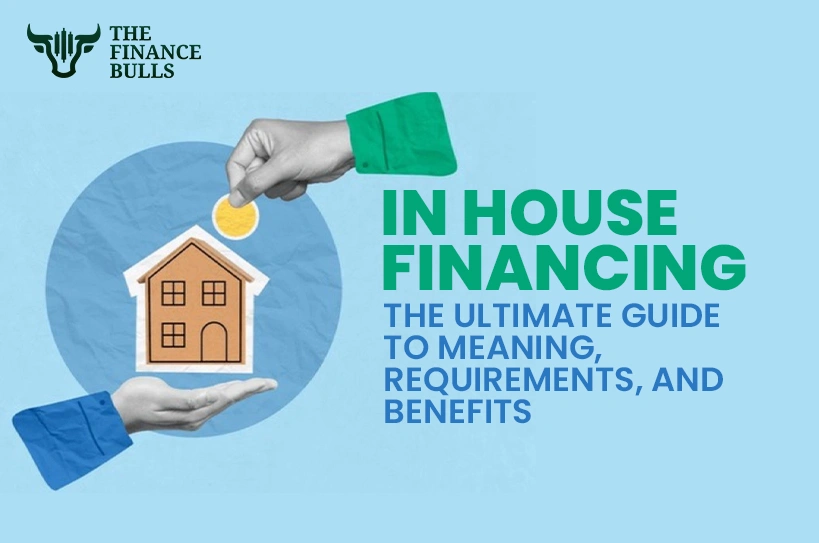
The Finance Bulls explains in house financing for businesses and customers. Get insights into approval processes, interest rates, and risk management today.
In house financing sounds simple, yet many buyers and business owners misunderstand how it really works. Some think it is only for car lots. Others assume it is always risky or always expensive.
The truth sits somewhere in the middle. This guide explains what in house financing means, how approval works, why rates are often higher, and when this direct lending model helps both customers and businesses.
What is In House Financing? Defining the Direct Lending Model
The basic meaning
In house financing means the seller provides the financing directly instead of sending the buyer to a bank, credit union, or outside lender. In simple terms, the business sells the product and also becomes the lender. The customer then makes payments to that same business under agreed terms.
Why businesses use this model
Businesses use in house financing to make buying easier for customers who may not qualify for traditional loans or who want a faster process. It is common in retail sectors where purchase values are meaningful, such as furniture, electronics, medical services, and especially in house financing car lots. By offering credit directly, the seller can close more sales and keep more control over the customer relationship.
How it differs from normal lending
The seller is independent of the lender in a bank loan. Under one roof is the case of in house dealer financing or other seller led credit. This may include shorter approvals and greater flexibility. It may also imply an increase in interest rates and an increase in the repayment terms in case the buyer does not pay. The most obvious distinction is that the seller of the item is the same person that takes the money every month.
How In House Financing Works: A Complete Manual for Businesses and Buyers
1. The seller acts as the lender
The core of in house financing is that the business does not just sell. It also funds the purchase. Once the customer is approved, the seller creates the payment plan and collects installments over time. This makes the buying process feel more direct than traditional lending.
2. The buyer applies with the seller
Instead of filling out a bank loan application, the buyer applies directly with the business. In many in house financing cars setups, for example, the dealer reviews income, employment and identity details on site. Some businesses still check credit, but many place more weight on current income and payment ability than on a perfect credit score.
3. Approval standards can be more flexible
This is one reason in house financing stays popular. Businesses may approve buyers who would struggle with bank underwriting. A thin credit file, past missed payments, or lower score may not lead to an automatic rejection. That said, easier approval does not mean the loan is cheaper. It usually means the lender is pricing in more risk.
4. Terms are set internally
Under in house dealer financing, the seller usually determines the down payment, the period of repayment, interest rate and policy of late payment. Since the business faces the risk, it can request higher initial payment or a repayment of a shorter time. Other sellers make the arrangement easy by making weekly or biweekly payments rather than prolonged schedules of monthly payments.
5. The product secures the loan in many cases
In many sectors, the financed item acts as security. With vehicles, the car can be repossessed if the customer defaults. With high-value equipment or furniture, the seller may also keep certain rights until the loan is fully repaid. This security reduces lender risk and makes direct credit possible.
6. Payment collection is part of the business model
Businesses offering in house financing need a system for billing, reminders, collections and account tracking. This turns a simple sales business into a mini-lender. If the seller handles this well, the model can create repeat customers and steady cash flow. If it handles it poorly, unpaid accounts and administrative burden can eat into profits.
7. Both sides trade convenience for risk
For buyers, the main win is access and speed. For sellers, the main win is more completed sales. But both sides take on trade-offs. The buyer may pay more in interest. The seller may face defaults, late payments and collection costs. That is why in house financing works best when terms are clear and the seller has a strong process.
| Core part | What it means in practice |
| Seller | Provides the product and the loan |
| Buyer | Applies directly with the seller |
| Approval | Often more flexible than banks |
| Terms | Set internally by the business |
| Payments | Made directly to the seller |
| Risk | Buyer faces higher rates, seller faces defaults |
How In House Financing Works: The Step-by-Step Approval Process
| Step | What happens | Why it matters |
| Initial application | The buyer submits basic details like ID, income, address and employment status directly to the seller. | This replaces the usual bank application and starts the seller’s internal review. |
| Review and risk check | The seller reviews affordability, down payment ability and sometimes credit history or past payment records. | Approval may be faster than a bank, but the seller still needs to judge repayment risk. |
| Down payment discussion | Many businesses ask for some money upfront before giving direct credit. | A down payment lowers risk for the lender and shows buyer commitment. |
| Offer of terms | The seller explains interest rate, payment size, loan length and late fee rules. | This is where buyers must slow down and read every number carefully. |
| Contract signing | The buyer signs the finance agreement and any security or repossession terms. | This creates the legal payment obligation and defines what happens on default. |
| Delivery of product | The customer receives the product once the contract and first payment conditions are met. | The loan becomes active and the repayment cycle begins. |
| Ongoing repayments | The buyer makes scheduled payments directly to the seller. | Staying current protects the buyer and keeps the seller’s finance model healthy. |
Key Advantages of In House Financing for Modern Businesses
Higher sales conversion
One clear advantage of in house financing is that it turns more interested shoppers into paying customers. A buyer who cannot pay full price today may still complete the purchase if monthly payments feel manageable. That reduces lost sales.
Stronger customer control
When a business funds the sale itself, it keeps more control over the relationship. The customer returns to the same company for payment questions, future purchases and account updates. This can build repeat business and loyalty over time.
Extra income through finance charges
Beyond the sale itself, businesses may earn interest income or fee income through the financing plan. That gives them a second profit stream. In sectors like in house financing car lots, this can be a major part of the overall business model, not just a side feature.
More flexibility in closing deals
A seller using in house dealer financing can adjust terms more quickly than a bank. It may change down payment size, stretch or shorten the term, or build a plan around the buyer’s pay schedule. That flexibility can help close deals that outside lenders would reject or delay.
Benefits for Customers: Why Buyers Prefer Direct Seller Credit
The Finance Bulls provides a forensic look at in house financing. Compare direct merchant credit with traditional bank loans to find the best deal in 2026.
Easier access to financing
Many customers choose in house financing because it may be easier to qualify for than a bank loan. People with weaker credit or recent setbacks often feel more comfortable applying directly with the seller.
Faster decisions
Direct seller credit usually moves faster than traditional lending. A buyer may walk in, apply, get approved and complete the purchase on the same day. That speed is a big reason in house financing cars remains attractive to urgent vehicle buyers.
Simpler communication
The customer speaks to one business instead of juggling a seller and a separate lender. Questions about the product, contract and payments can often be handled in one place. That simpler communication reduces confusion for many buyers.
Flexible payment structures
Some businesses can align payments with the customer’s pay cycle or agree on a custom schedule. While not always generous, this flexibility is still more than many outside lenders offer. For buyers with irregular income or non-standard work schedules, this can be very useful.
The Risks Involved: Capital Strain and Credit Default Challenges
Risk for the business
- Offering in house financing ties up business capital in loans instead of immediate cash.
- If too many buyers pay late, the company may face cash flow pressure.
- Collection work, legal paperwork and repossession costs can become expensive.
- Weak screening standards can turn higher sales into higher defaults.
Risk for the buyer
- Interest rates are often higher than bank loans because the seller takes more risk.
- Missing payments can lead to repossession, service suspension or legal action depending on the product.
- Some buyers focus only on approval and monthly payment, then overlook total cost.
- A seller with weak account systems may create confusion around balances, due dates or penalties.
The biggest challenge in in house dealer financing is that convenience can hide risk. Businesses may overextend themselves, and buyers may sign quickly without comparing better funding options. That is why both sides need a disciplined process.
In House Financing Interest Rates: Why They Are Higher Than Banks
Higher risk means higher pricing
The biggest reason rates are higher in in house financing is simple. Sellers often approve customers who carry more credit risk than bank borrowers. To balance that risk, they price loans higher.
Smaller lenders have fewer advantages
Large banks have deep funding pools, advanced risk models and broad portfolios. A small business offering direct credit does not. Its cost of carrying unpaid balances is higher, so its rates tend to reflect that difference.
Convenience adds a premium
Speed and flexibility also are not cheap. The less difficult it gets to be approved, the higher the rate will be increased. This is typical in in house financing car lots where same day approvals are attractive to the customers but not so friendly to the dealers.
Practically, consumers are expected to pay higher than the cost they would pay using a bank or credit union, particularly when they have poor credit history. Not necessarily does that make the deal bad. It only implies that the convenience premium has to be known prior to signing.
In House Financing vs. Third-Party Lending: A Forensic Comparison
| In house financing | Third-party lending |
| The seller provides both the product and the loan. | The seller and lender are separate businesses. |
| Approval is often faster and more flexible. | Approval is usually stricter and more document-heavy. |
| Interest rates are often higher. | Rates may be lower for strong borrowers. |
| Communication stays under one roof. | The buyer may need to deal with both seller and lender. |
| Common in in-house financing cars and high-risk buyer segments. | Common for mainstream borrowers with stronger credit profiles. |
| Seller takes default risk directly. | The lender takes the loan risk, not the seller. |
Conclusion
Is in house financing right for you? The Finance Bulls breaks down the benefits of direct seller lending and how it helps buyers with low credit scores.
In house is economical as it addresses a genuine issue: most buyers require access, speed and flexibility more than ideal rates. In the case of businesses, it can be used to sell and retain customers. Nevertheless, only in a situation when both parties are aware of the contract, the price, and the actual dangers of more convenient authorization, the model may work.
FAQs
What is the primary meaning of in house financing?
It means the seller gives the loan directly. The buyer purchases the product and repays the same business over time.
Is in house financing easier to get than a bank loan?
Yes, in many cases it is easier. Sellers often use more flexible approval standards than banks or credit unions.
Do I need to pay a down payment for in house financing?
Often yes, but not always. Many businesses ask for a down payment to lower risk and show buyer commitment.
Does in house financing affect my credit score?
It can, depending on how the seller reports accounts. Some businesses report payment history, while others keep records only in-house.
Why are interest rates higher in in house financing?
Rates are usually higher because the seller takes more risk. Flexible approval and faster access often come with a pricing premium.
Can small businesses offer in house financing?
Yes, small businesses can offer it. They just need a strong process for contracts, collections and risk control.
What happens if I default on an in house financing loan?
The seller may charge late fees or take back the financed item. In serious cases, it may also use collections or legal action.
Is in house financing the same as Buy Now, Pay Later (BNPL)?
Not exactly, though they are related ideas. BNPL is usually shorter-term and more standardised, while in house financing is seller-controlled and often longer.
What documents are required for in house financing?
Most sellers ask for ID, proof of income and address details. Some may also ask for bank statements, employment proof or references.
Must Read:
- Consistent financial reporting
- Elderly trucker financial hardship
- Financial system inquiry
- Legal financial obligations
- star vally financial